
Hospital and clinic planning should be easy to read even before finishes and equipment are added. Patients, staff and visitors must understand where to enter, where to wait, where to move and how to exit.
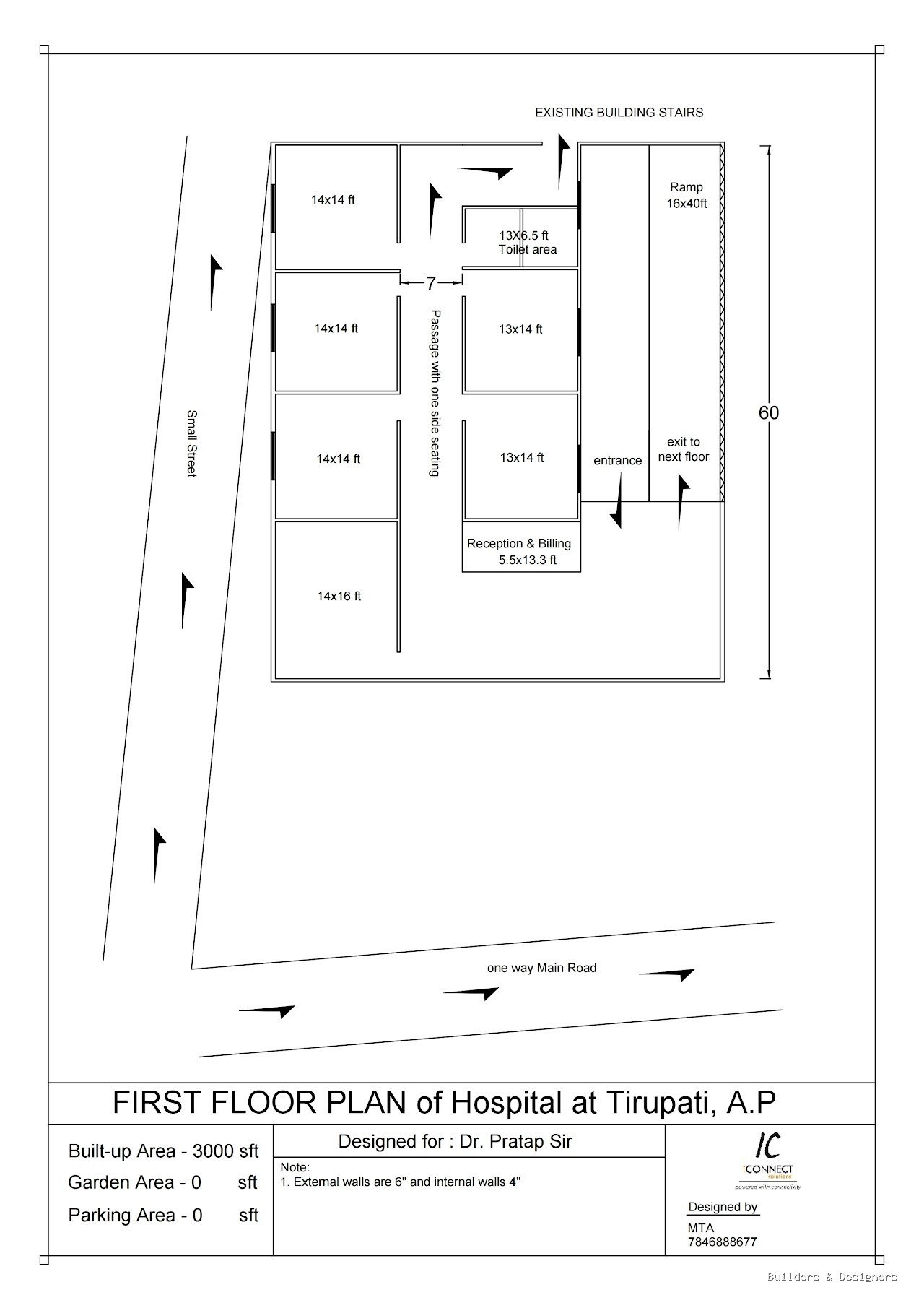
The Tirupati first-floor hospital concept shows a reception and billing area, a central passage with one-side seating, multiple room modules, toilet area, ramp and connection to existing building stairs. The arrows make the intended movement very clear.
Reception should control the first decision point
In healthcare spaces, the first confusion usually happens at entry. A visible reception and billing desk helps people know where to report before moving to consultation or treatment rooms.
- Keep reception near the main entry.
- Avoid blocking passage width.
- Provide space for waiting or seating.
Ramps and stairs must be planned together
The plan shows a ramp along one side and existing stairs at the back. This is important because different users may need different access routes, especially in healthcare buildings.
- Check ramp slope and landing requirements.
- Keep exit direction clear.
- Coordinate with existing stair levels.
Passages should support simple movement
A hospital passage should not feel like a leftover corridor. It must support movement, waiting and emergency access without becoming congested.
- Keep passage width practical.
- Avoid doors opening into critical movement paths.
- Plan toilets where they are easy to find.
A hospital floor plan becomes better when circulation is solved early. Once movement is clear, the rooms, services and technical coordination can be developed with more confidence.