A modern residential elevation can quickly become overloaded if every surface gets a different treatment. A controlled material palette helps the building look premium without becoming too busy.
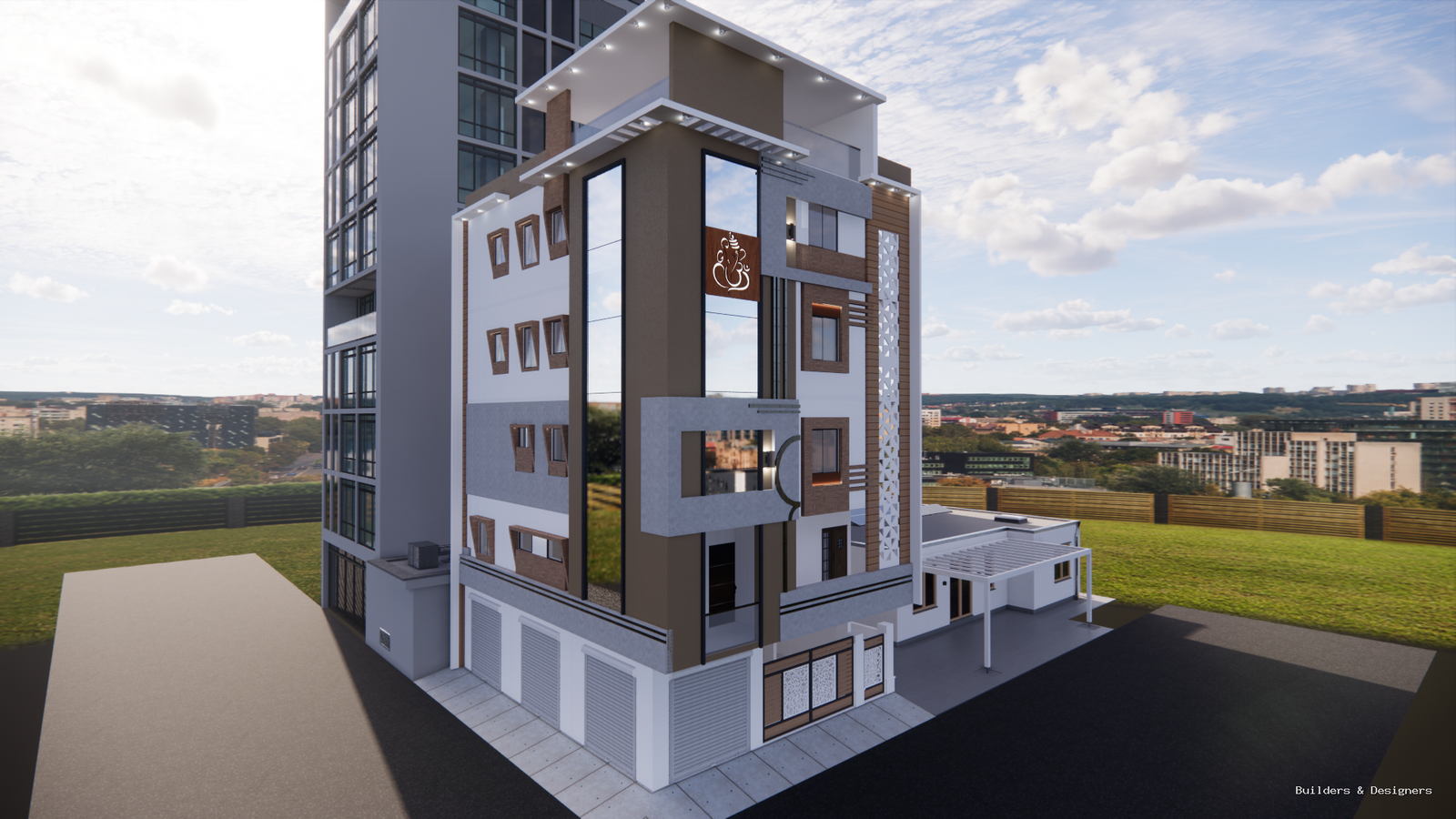
The Electronic City exterior view uses white and grey surfaces, glass balcony elements, wood-textured cladding, vertical decorative panels and warm lighting. The idea is to give the building a clean urban character.
Limit the number of dominant finishes
Using fewer finishes usually gives a better result than using many expensive-looking materials. The main wall colour, cladding and glass should support each other.
- Choose one main wall tone.
- Use cladding only where it adds value.
- Keep metal and glass details consistent.
Balconies shape the facade rhythm
Balcony projections and railings are not just functional. They decide shadow, depth and repetition across the elevation.
- Check railing height and material.
- Coordinate balcony lights and drainage.
- Avoid visual clutter on the front face.
Lighting should support the material
Warm lights can improve evening appearance, but they should reveal the architecture rather than hide weak details.
- Highlight entry and vertical features.
- Avoid over-lighting every surface.
- Plan fixture positions before execution.
A good residential facade should still look calm after construction. That depends on material discipline, proportion and practical detailing as much as the render itself.