
A narrow plot can still support a comfortable small home when the plan avoids unnecessary passages and gives each room a clear place in the sequence. The main challenge is to use the width carefully without making movement feel obstructed.
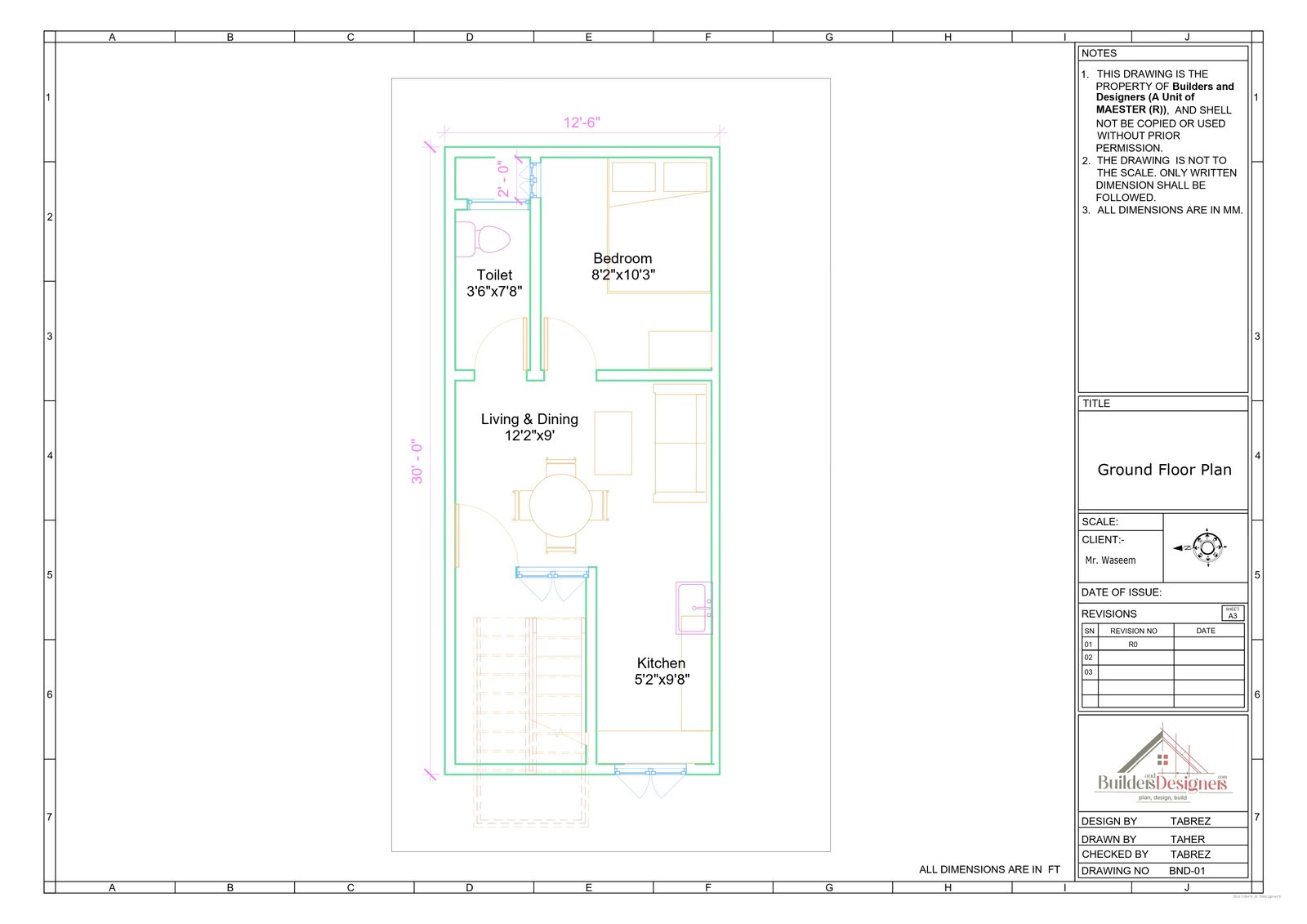
This ground-floor plan at RT Nagar, Bengaluru, is arranged within an approximate 12-foot-6-inch by 30-foot footprint. The kitchen and staircase are near the front, the living and dining space occupies the centre, and the bedroom and toilet are placed toward the quieter end.
Use the centre as a shared living zone
Combining living and dining can make a compact plan feel less divided. Furniture should be shown during planning because sofa depth, dining-chair movement and the main walking path all compete for the same area. In this plan, the shared space connects the entrance side with the private bedroom side.
Keep circulation direct
Long internal corridors consume valuable floor area on a narrow site. A direct sequence can reduce that loss, but door positions must be checked so they do not conflict with furniture or one another. The route from entrance to bedroom should remain clear even when the dining table and seating are in use.
Coordinate the kitchen with the staircase
The front portion contains both the kitchen and stair access. These elements need careful coordination for headroom, ventilation, storage and movement. The kitchen counter should remain usable without blocking entry or stair circulation.
Protect bedroom privacy
Placing the bedroom away from the entrance gives it more privacy. The nearby toilet is convenient, but its door and ventilation should be planned so the living area does not feel exposed to it.
- Show real furniture sizes before finalising the shared living space.
- Check door swings along the main movement path.
- Coordinate staircase headroom and kitchen storage.
- Provide ventilation to kitchen and toilet wet areas.
- Keep the bedroom end visually separated from the entrance.
Compact planning is not about fitting the maximum number of rooms. It is about giving the essential rooms enough usable space and making movement between them simple.