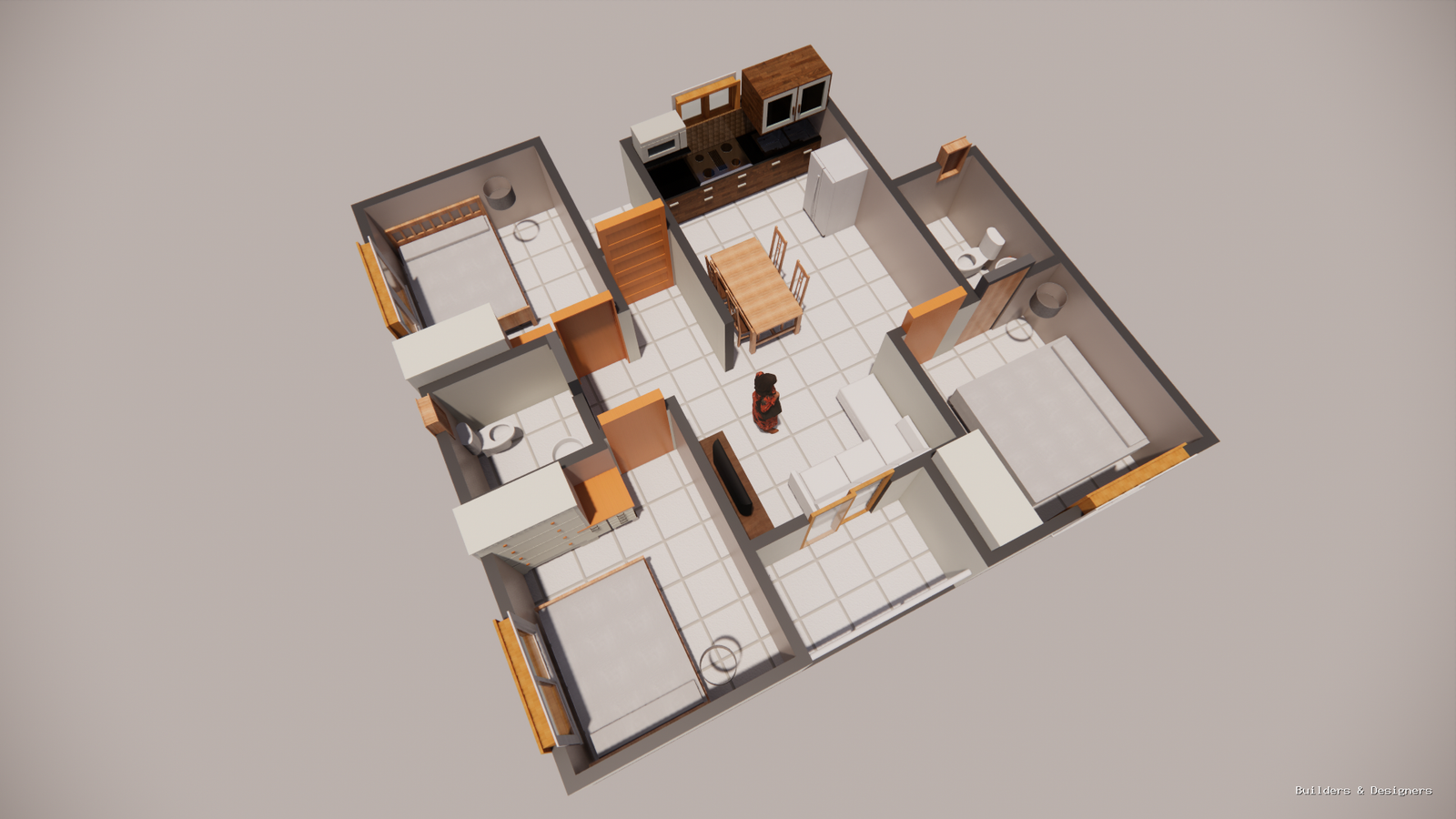
A compact home can work very well when the movement is simple and the furniture is placed with care. In a 3D floor plan, the family can understand this more easily because the beds, dining table, kitchen counter, toilets and internal doors are visible together.
This residential 3D layout shows private bedrooms around a common living and dining zone. The kitchen is close to the dining area, and the toilets are placed where they can serve the rooms without disturbing the main common space.
Furniture shows whether the rooms are usable
A room may look sufficient in a line drawing, but furniture quickly reveals the real comfort level. Bed clearances, wardrobe positions, dining movement and sofa placement should all be checked before the plan is finalised.
- Check walking space around beds.
- Keep dining movement clear from kitchen shutters.
- Avoid placing wardrobes where doors will clash.
Kitchen and dining should work as one zone
In this view, the kitchen and dining table are close enough for daily use. This is practical for Indian homes because cooking, serving and cleaning usually happen many times in a day.
- Keep the refrigerator accessible.
- Leave counter space near the stove.
- Plan electrical points before cabinet execution.
Toilet privacy matters in small layouts
When toilets open near bedrooms or common areas, the door direction and ventilation should be checked carefully. A small planning change at this stage can improve privacy and comfort later.
- Review door swing direction.
- Keep wet walls coordinated for plumbing.
- Provide proper ventilation wherever possible.
A 3D plan is useful because it converts a technical drawing into something the client can read quickly. It helps the designer and family discuss daily use before site work or interior execution begins.