In a G+4 residential building, the elevation has to handle height carefully. If the facade is too plain, the building can look heavy. If it has too many features, it can look restless.
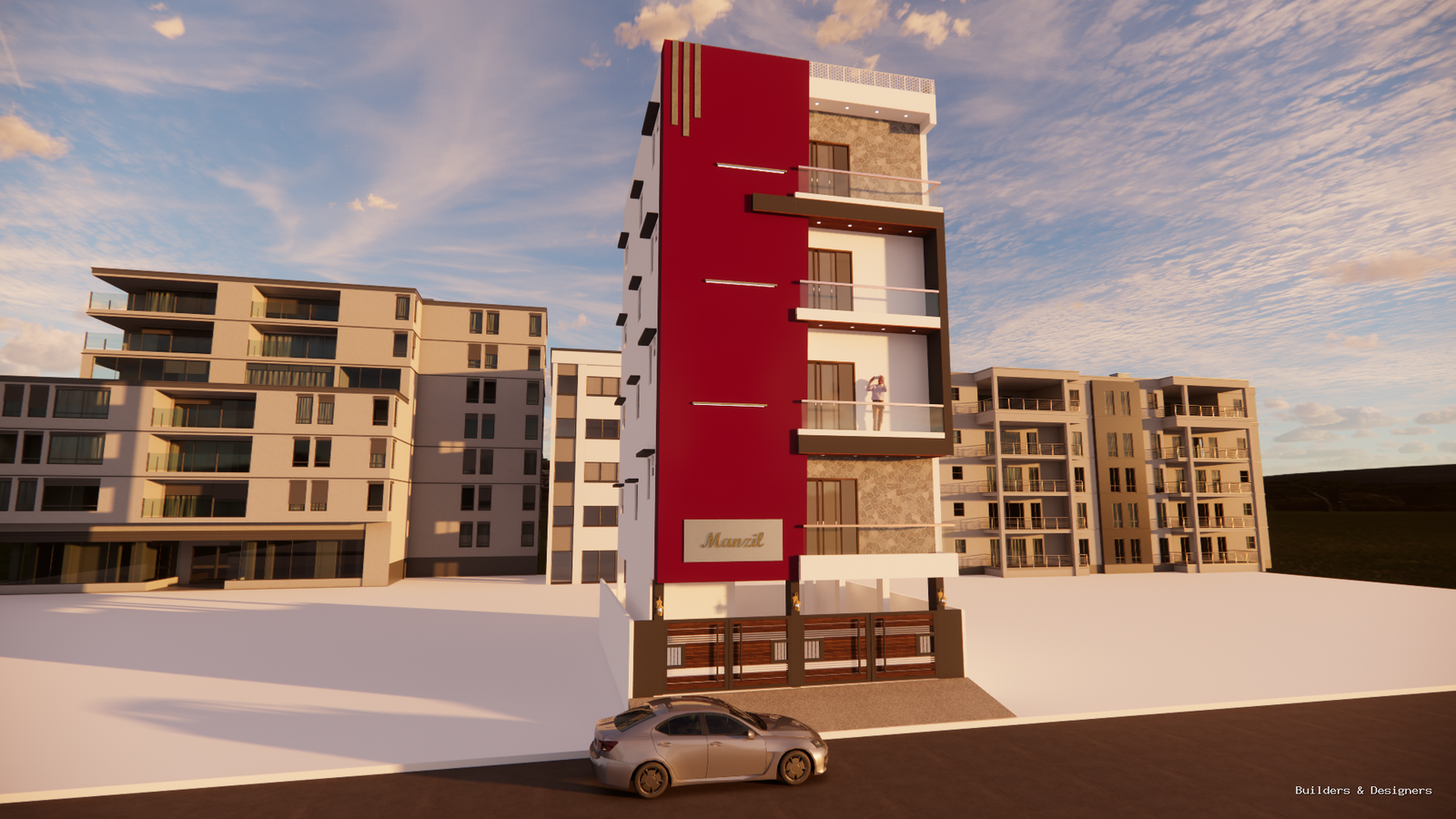
The Zabiulah residential views show a tall facade with a strong red vertical feature, repeated balcony lines, light wall surfaces and darker accent bands. The design uses the central feature to give the building a clear identity.
Vertical elements control height
A strong vertical band can make a tall building feel organised. It gives the eye one main reference point instead of allowing every balcony and window to compete.
- Keep vertical features proportionate.
- Avoid too many competing facade lines.
- Use colour to support the massing.
Balcony rhythm should feel consistent
Repeated balconies create a rhythm across floors. Their railing, projection and shadow lines should be checked together because they will be seen from street level.
- Align balcony edges where possible.
- Check railing material in daylight and night views.
- Coordinate balcony drainage and lighting.
Entrance identity matters at ground level
A tall building still needs a grounded entrance. Gate, lobby face, lighting and compound wall should make the arrival point clear.
- Keep the entry visible from the approach.
- Avoid hiding the gate under heavy facade elements.
- Plan lighting around the entrance.
A good G+4 elevation is not only about a striking render. It should help the client approve a facade that can be executed cleanly and still look balanced after construction.