
Small service blocks still need serious structural coordination. A toilet block may look simple, but footing positions, column bases, excavation pockets and service routes must be planned clearly before site work begins.
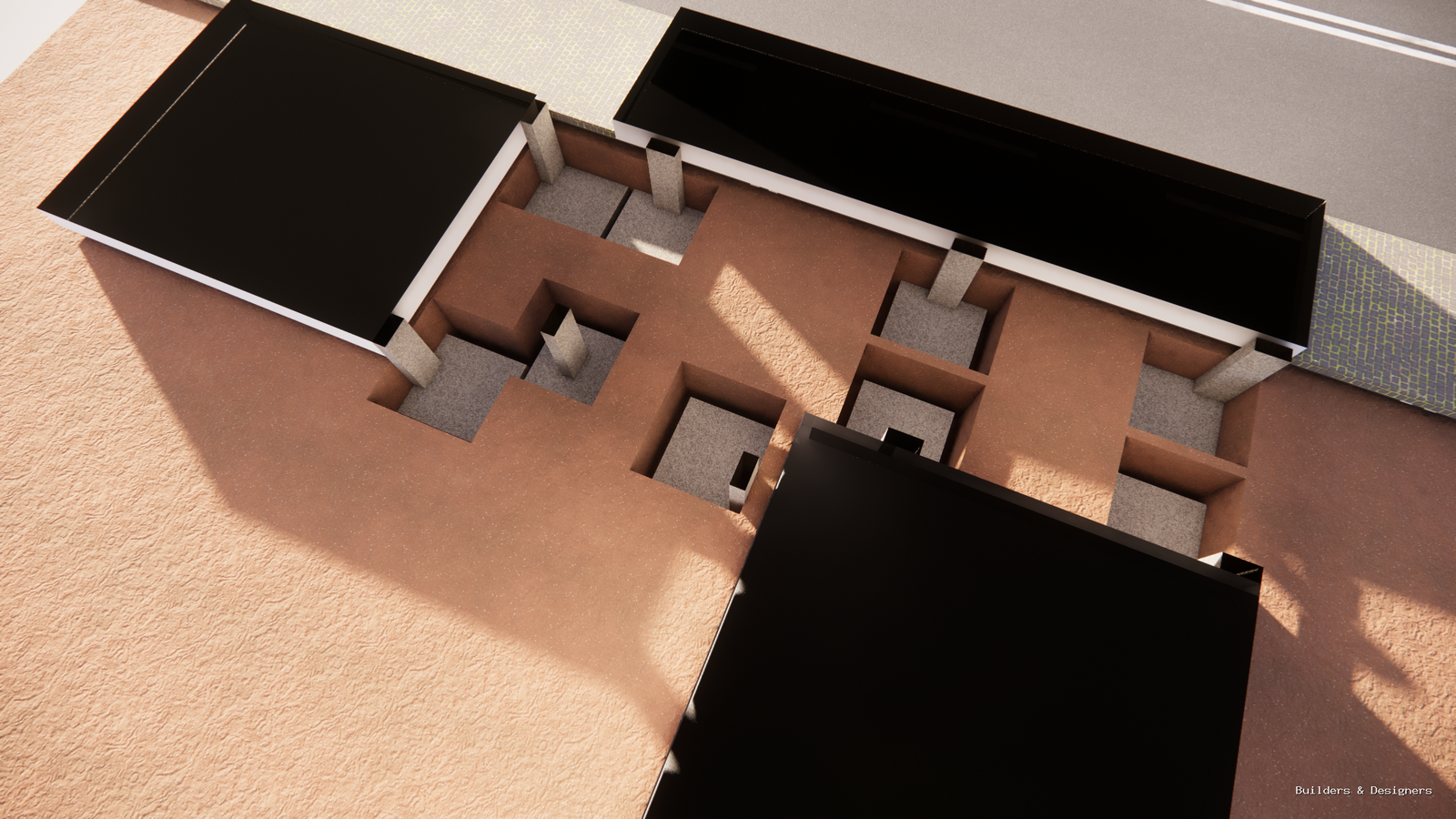
The Hebbal Masjid toilet footing views show multiple isolated footing pits and column base locations around the toilet block footprint. The 3D model makes the excavation stage easier to understand than a flat drawing alone.
Footing pockets should be easy to identify
The rendered view shows each excavation pocket as a separate structural point. This helps the site team understand where excavation is required and where soil should remain undisturbed.
- Mark footing centres before excavation.
- Keep pit sizes consistent with structural drawings.
- Avoid over-excavation near wall lines.
Column bases need alignment before concrete
The visible column bases show how the structure will rise from the footing points. If alignment is checked early, shuttering and reinforcement work becomes more controlled.
- Check centre lines from both directions.
- Confirm base positions before PCC.
- Coordinate with toilet wall layout.
Service blocks need civil and plumbing coordination
Toilet blocks involve plumbing, slopes, walls, doors and ventilation. Foundation planning should leave space for later service work instead of forcing changes after construction starts.
- Plan pipe routes early.
- Coordinate floor levels and slope.
- Keep inspection access practical.
A 3D footing view is useful because it helps non-technical stakeholders understand what the site team is about to execute. That clarity reduces confusion during the first stage of construction.