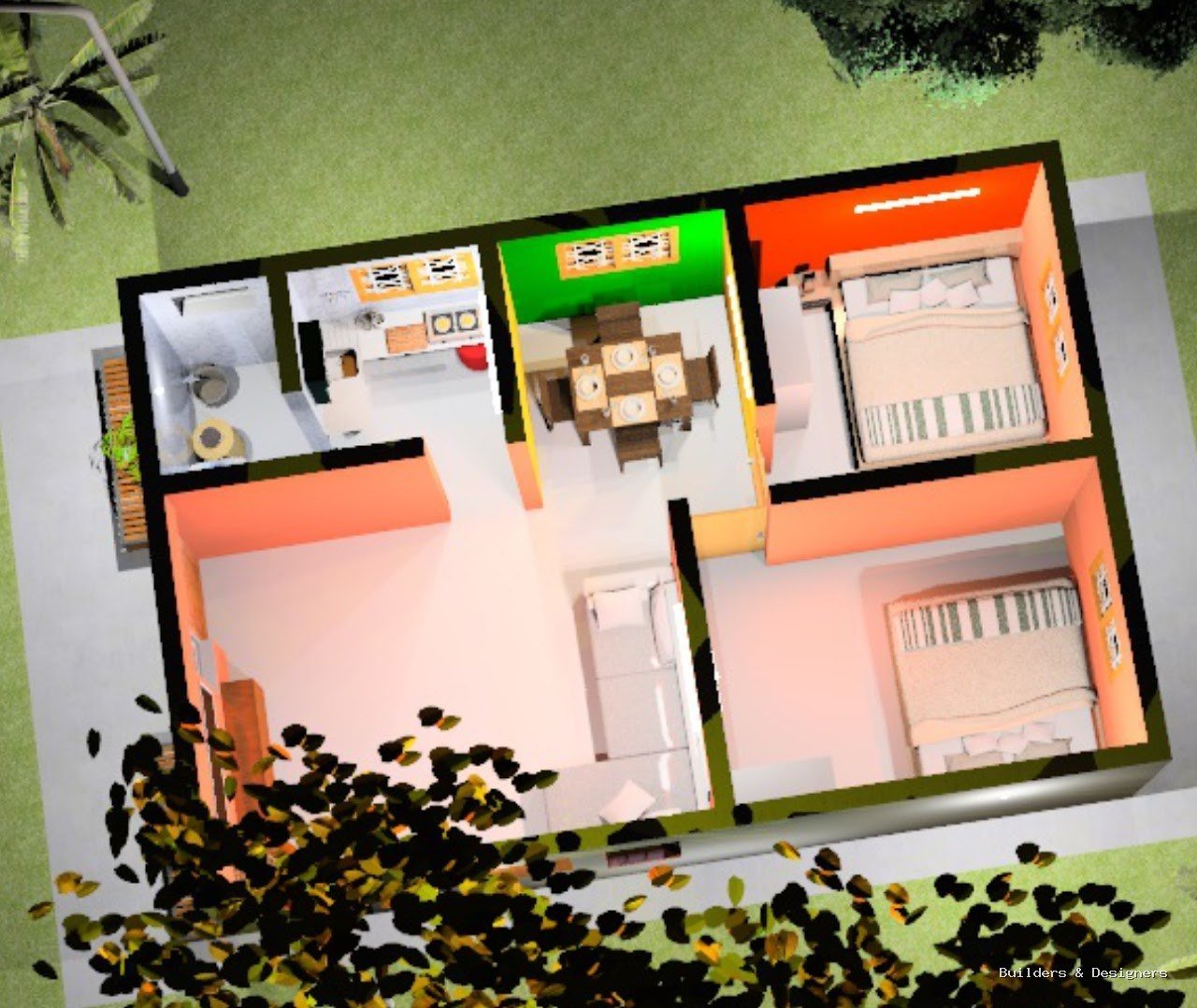
Some clients understand a plan faster when they see it in three dimensions. Walls, furniture, room colours, beds, dining table and kitchen positions make the house feel more real than a flat drawing.
This village-site 3D floor plan shows a living area, dining space, kitchen, two bedrooms and toilet/bathroom zone. The room colours make each zone easy to read at a glance.
Zoning should be clear from the first view
A good plan should help people understand public, private and service areas quickly. In this 3D view, the living space is kept separate from the bedrooms, while the kitchen and dining are close to each other.
- Keep common areas easy to approach.
- Place bedrooms where privacy is better.
- Keep kitchen and dining movement short.
Furniture gives scale to the plan
The sofa, beds and dining table help the client judge whether the room sizes feel comfortable. This is especially useful before detailed interior decisions are made.
- Review bed clearance.
- Check dining chair movement.
- Avoid oversized furniture in compact rooms.
Wet areas need early coordination
The toilet and bath area should be checked for plumbing, ventilation, privacy and access. Even a simple 3D plan can show whether the placement feels practical.
- Plan ventilation early.
- Keep wet walls coordinated.
- Avoid awkward toilet door placement.
A 3D plan does not replace technical drawings, but it makes discussion easier. It helps the client ask better questions and helps the designer explain the house more clearly.