
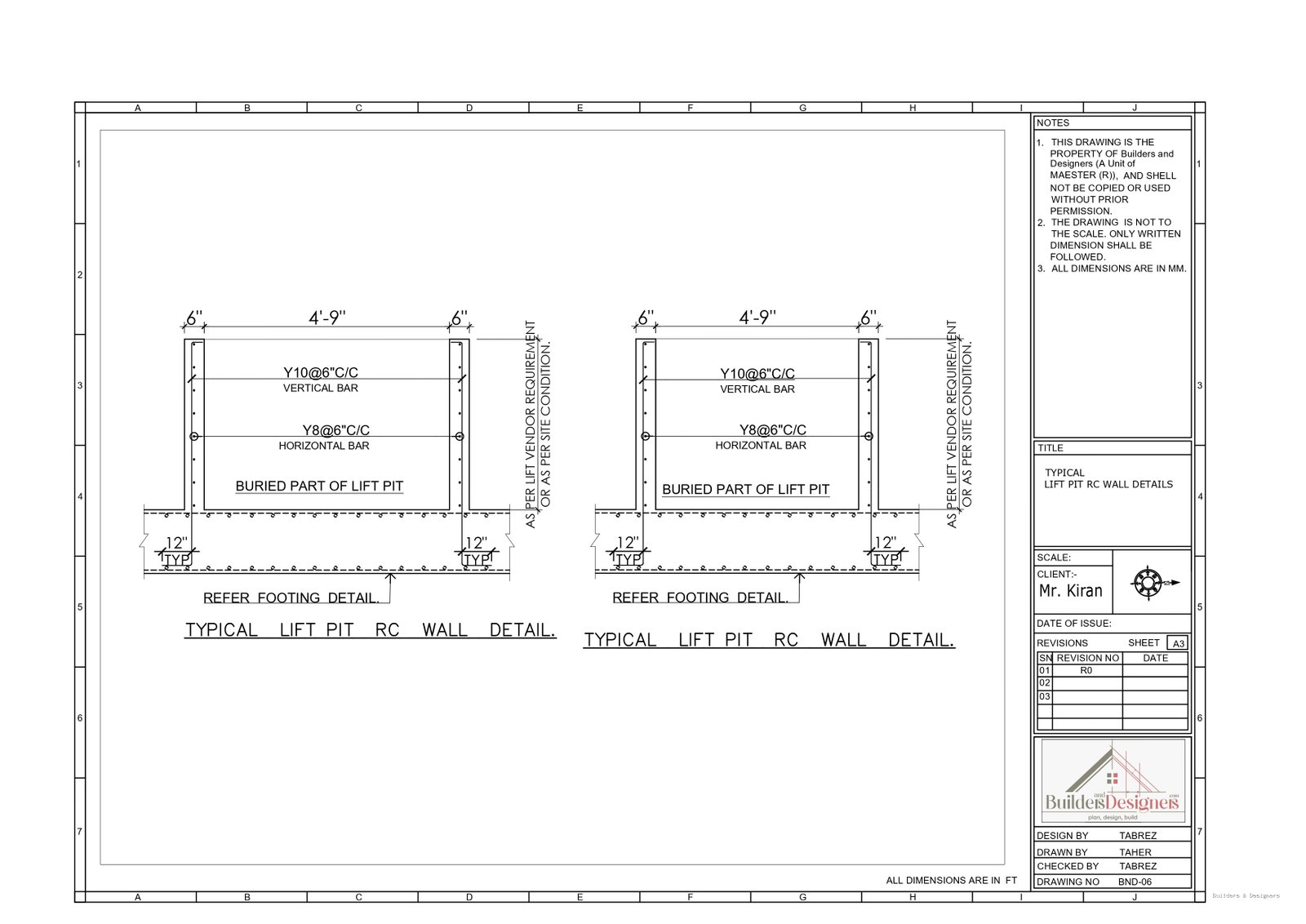
A lift may be selected later in the project, but the space and structural provision for it cannot always be postponed. The lift pit is below floor level and can affect excavation, foundation work, waterproofing, wall reinforcement and the dimensions available around the shaft.
For this G+2 residence at Tiptur, the architectural ground-floor plan includes a lift provision within the parking area. A separate structural sheet shows typical RCC lift-pit wall details and notes that final requirements must be coordinated with the selected lift vendor and site conditions.
Reserve the position in the architectural plan
The lift location should work with parking, staircase access and movement into the house. Its shaft and doors need adequate clear space, while structural walls and columns around it must remain coordinated. Moving the lift after foundation work begins can affect several drawings.
Confirm vendor requirements before execution
Lift suppliers may require specific internal shaft dimensions, pit depth, overhead clearance, openings and equipment arrangements. A typical structural detail is useful for planning, but it should be checked against the selected system before construction.
Coordinate pit walls with foundation levels
The drawing shows the buried portion of the lift pit, RCC wall reinforcement and a base related to the footing detail. Excavation depth and nearby foundations need careful checking so that the pit is built at the correct position and level.
Plan waterproofing and drainage carefully
Because the pit is below the surrounding floor, water entry can become a maintenance issue. Waterproofing treatment, construction joints and any permitted drainage arrangement should be resolved according to site conditions and the final engineering details.
- Freeze the lift location before foundation setting-out.
- Obtain the selected vendor's shaft and pit requirements.
- Match pit depth with project levels and nearby footings.
- Coordinate RCC wall reinforcement and openings.
- Resolve waterproofing before backfilling and floor finishing.
A residential lift provision becomes practical when architectural space, structural details and vendor information are coordinated early. The pit may be hidden after completion, but errors there are difficult to correct later.