
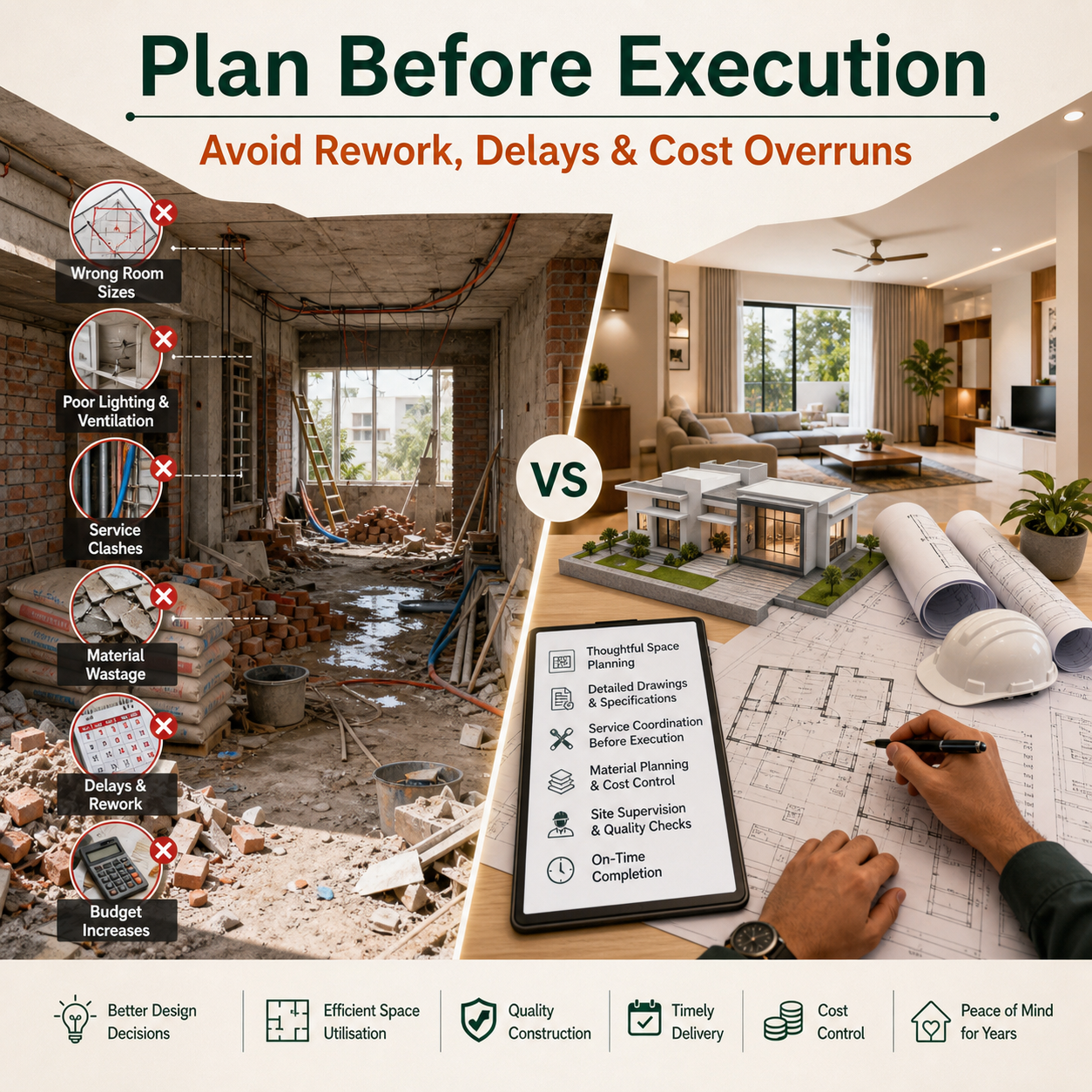
Many project problems do not start at site. They start earlier, when execution begins before the design, drawings, space planning, service coordination and supervision plan are properly ready.
A house, office or interior project may look simple from outside, but every decision is connected. Room sizes affect furniture. Furniture affects electrical points. Electrical and plumbing points affect walls, ceilings and finishes. Material decisions affect budget and maintenance. When these decisions are not planned before execution, the site team is forced to solve design issues during construction.
Rework becomes expensive very quickly
Small changes on paper are easy. The same changes after brickwork, plaster, electrical conduits or plumbing lines are completed can become costly and stressful. Breaking and redoing work wastes labour, material and time.
- Wrong room proportions can make furniture placement difficult.
- Door and window positions may clash with wardrobes or counters.
- Electrical points may end up behind furniture.
- Plumbing lines may need shifting after wall work is done.
- Ceiling lights and fans may not align with the final layout.
Good design and working drawings reduce these avoidable corrections before they reach site.
Space planning decides daily comfort
A space is not successful only because it looks attractive. It should support how people live and work every day. Without proper space planning, rooms may look fine in size but feel uncomfortable in use.
For homes, this can mean poor walking space around beds, awkward kitchen movement, badly placed wardrobes, dark corners, insufficient ventilation or dining areas becoming passage spaces. For offices and commercial spaces, it can mean poor customer flow, weak storage planning, uncomfortable workstations or wasted floor area.
Before execution, a designer should review the layout with furniture, circulation, natural light, ventilation, service points and future maintenance in mind.
Services need coordination before finishes
Electrical, plumbing, HVAC, lighting, drainage, waterproofing and false ceiling work cannot be treated separately. They all meet inside the same walls, floors and ceilings.
When service coordination is weak, problems usually appear late. The electrician may need a point where a wardrobe is planned. A plumber may need a shaft that was not kept. A light may fall in the wrong place because the ceiling layout was not checked. An AC drain may disturb the elevation or interior finish.
A good consultant checks these items before execution starts, so the site team has a clear sequence and fewer doubts.
Supervision protects the design intent
Even a good design can fail if execution is not supervised. Site supervision helps ensure that the work follows the drawing, dimensions are checked, materials are used correctly and quality issues are corrected early.
Supervision is not only about visiting the site after something goes wrong. It is about regular checking, coordination with workers, reviewing workmanship, confirming levels and measurements, and making sure the final result matches the approved design.
This is especially important for structural details, waterproofing, electrical conduits, plumbing lines, tile levels, ceiling work, joinery and finishing details.
Cost control starts before construction
Many clients think consultants increase project cost. In reality, good planning often prevents hidden cost increases. Clear drawings, scope clarity, material planning and supervision reduce wastage and help avoid repeated corrections.
A proper design and supervision consultant helps the client understand what is being built, what materials are required, what sequence should be followed and where quality checks are needed. That clarity gives better control over budget and time.
What should be ready before execution
Before starting construction or interior execution, the client should ideally have a clear layout, furniture or usage plan, working drawings, service coordination, material direction, budget understanding and a supervision process.
- Finalised space planning and room usage.
- Architectural drawings and working details.
- Electrical, plumbing and service coordination.
- Material and finish direction.
- Site execution sequence.
- Quality checkpoints and supervision plan.
Execution becomes smoother when these decisions are made before site activity starts. Good planning does not remove every challenge, but it reduces confusion, rework and avoidable cost.
Design and supervision are not only about making a project look better. They are about protecting the client's time, money and peace of mind.