
Electrical planning should not be left until the interior work is already moving. Light points, switch boards, plug points, fans and distribution boxes affect furniture, ceiling design, wardrobes, kitchen counters and daily use.
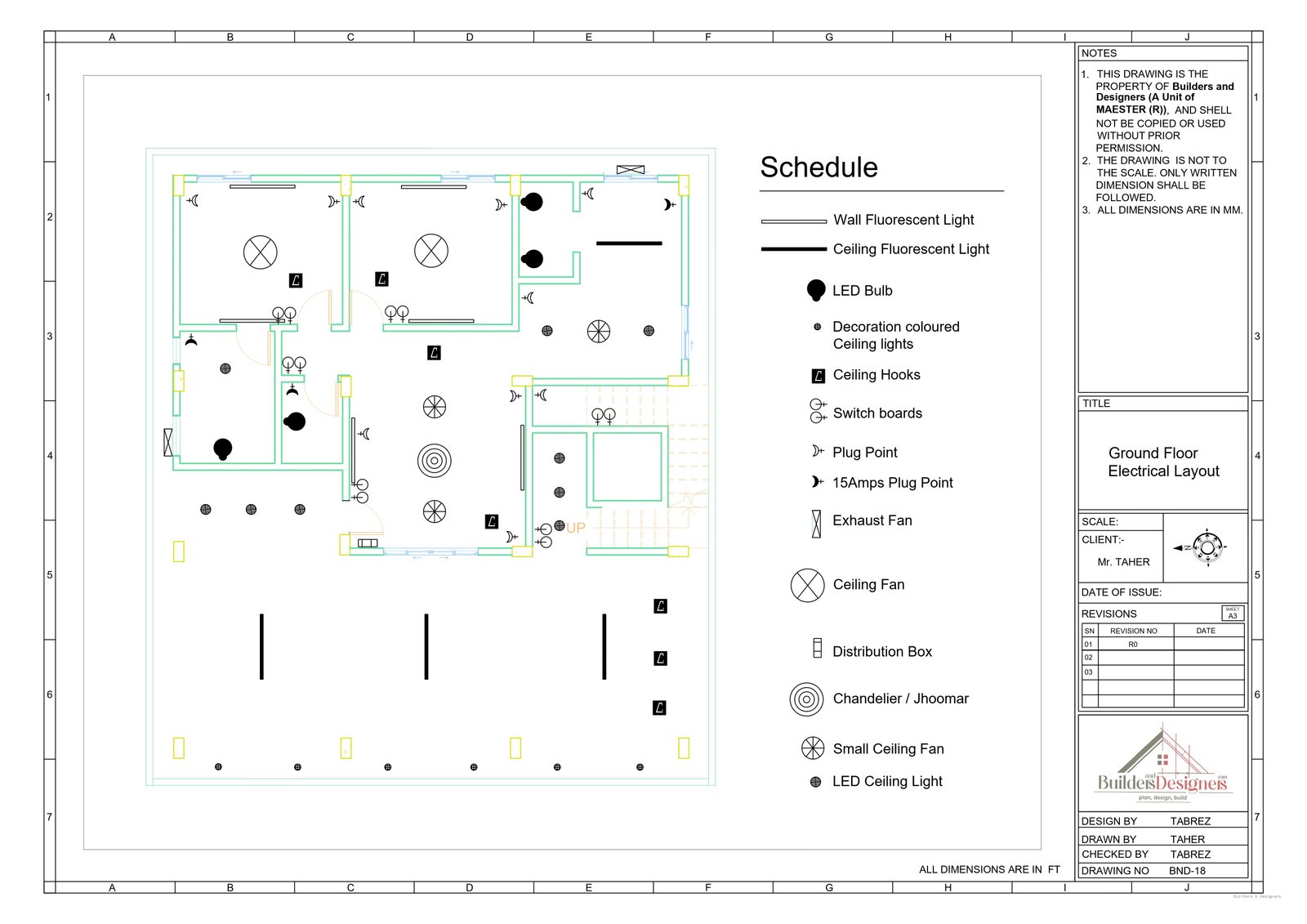
The Taher G+2 electrical sheets show ground and first floor layouts with a clear symbol schedule. The drawings mark wall lights, ceiling lights, LED bulbs, switch boards, plug points, 15 amp points, fans and distribution boxes.
Switch boards should follow furniture
Switch locations should match how people enter and use each room. If furniture is planned later without checking electrical points, switches can end up behind wardrobes or beds.
- Place switches near room entry points.
- Check bed and wardrobe positions.
- Avoid hiding points behind fixed furniture.
Plug points decide daily convenience
Phone charging, appliances, TV units, study tables, kitchen equipment and cleaning tools all need planned plug points. Random points lead to extension cords and messy interiors.
- Plan 15 amp points for heavy appliances.
- Keep counter plug points accessible.
- Coordinate TV and internet points.
Lighting should match ceiling and mood
Electrical drawings help coordinate ceiling hooks, fans, chandeliers and decorative lights before false ceiling or finishing work starts.
- Check fan and light centre points.
- Plan decorative lights with ceiling design.
- Keep service access for distribution boxes.
A clean interior begins with invisible planning. Electrical layouts may look technical, but they decide a lot of everyday comfort inside the home.