
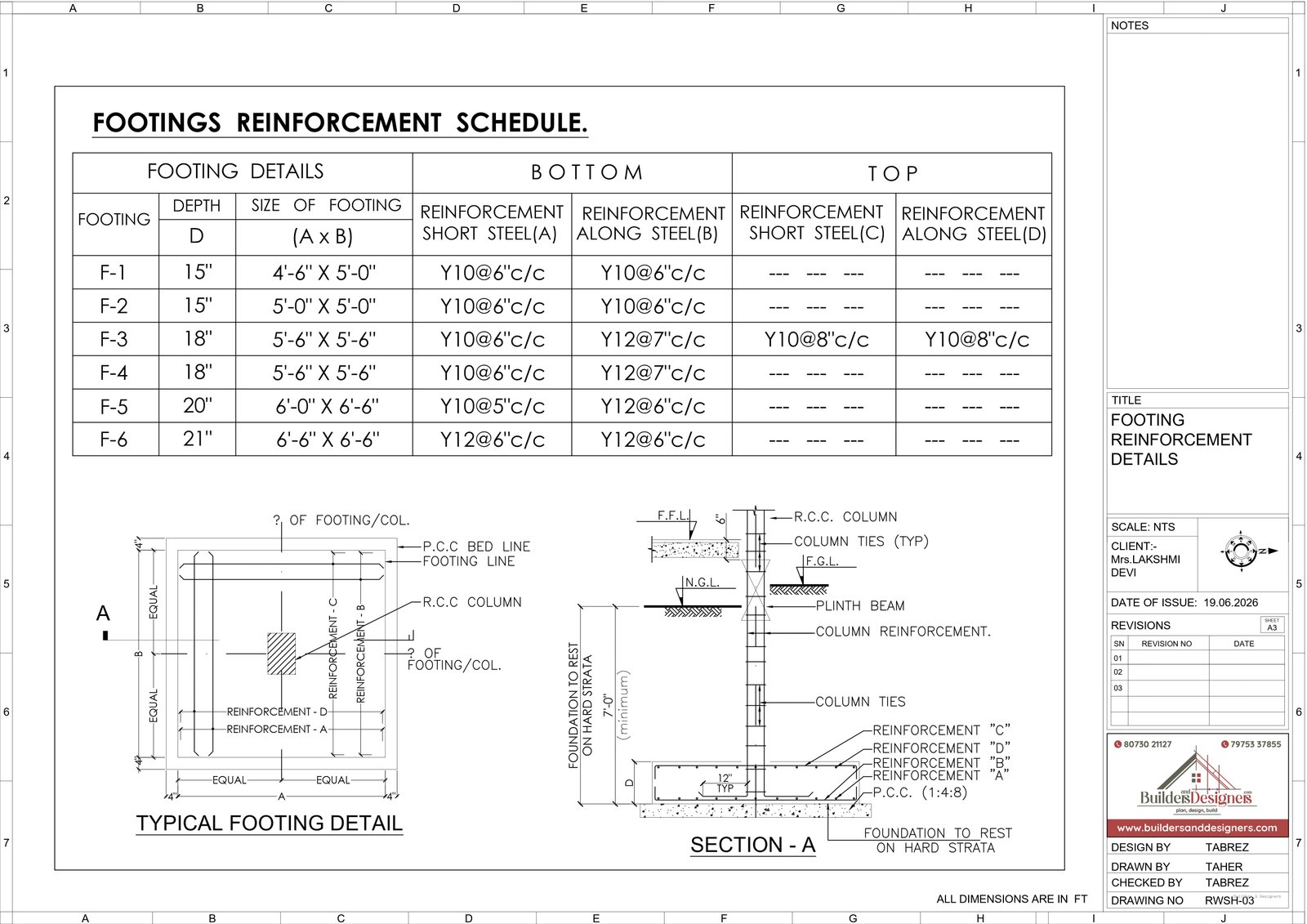
For a residential building, structural drawings must be clear enough for both the engineer and the site team. The footing schedule, footing layout and column marking drawing should all speak the same language.
The Tumkur drawing set for Mrs. Lakshmi Devi shows this coordination. The footing reinforcement schedule lists footing types, sizes, depths and bar spacing, while the column marking and footing layout sheets show where those elements sit on the building grid.
A schedule alone is not enough
A footing reinforcement schedule gives the technical details, but the site team also needs to know which footing type goes where. This is why the schedule must be read along with the footing layout.
- Match every F-number with the plan.
- Check depth and size before excavation.
- Confirm bottom and top reinforcement separately.
Column marking controls the setting out
Columns are the main reference points for footing placement. If column marking is not coordinated with the footing layout, site setting out becomes risky and corrections become costly.
- Use grid lines as the main reference.
- Check column sizes and centre lines.
- Resolve mismatches before concreting.
Notes help avoid site assumptions
Structural sheets should include material grades, cover requirements, lap notes and execution instructions. These notes reduce guesswork during reinforcement tying and checking.
- Mention concrete grade clearly.
- Mention steel grade clearly.
- Keep cover and lap instructions visible.
Good structural detailing is not just about drawing more lines. It is about making the drawings usable on site, so the engineer, contractor and client can rely on the same information.