
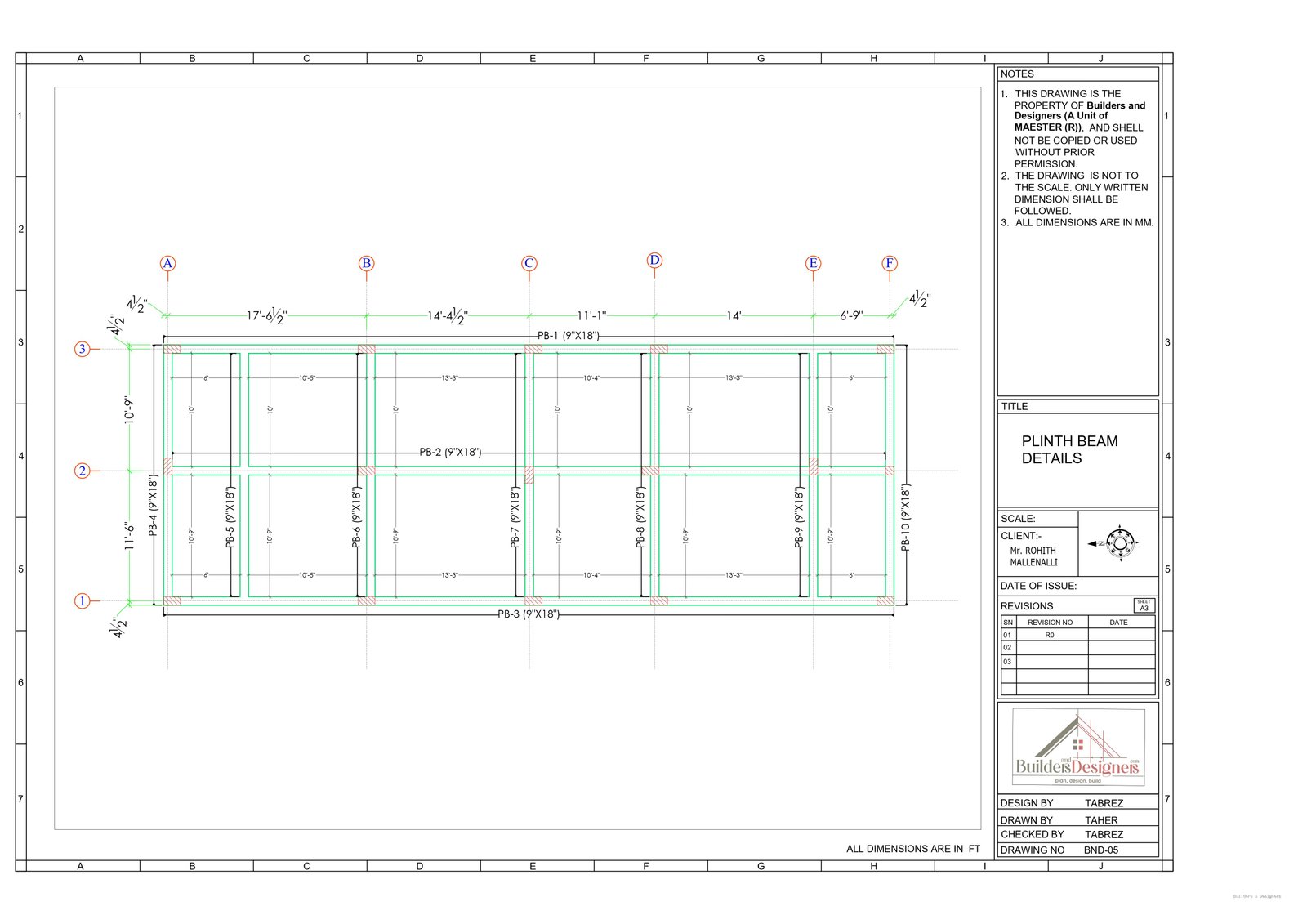
The plinth beam stage is one of the most important coordination points in a residential structure. It connects the foundation system with the building that will come above ground level.
For Mr. Rohith Mallenalli's G+2 residential structure in Tiptur, the structural package includes footing layout, reinforcement schedule and plinth beam details. The plinth beam sheet clearly shows beam positions, sizes and grid alignment.
Plinth beams help control wall lines
Once the plinth beam is cast, wall construction normally follows its alignment. If the beam layout is unclear, wall positions and room sizes can become difficult to control.
- Check beam centre lines.
- Match wall positions with architectural drawings.
- Confirm all offsets before shuttering.
They connect columns into one system
The plinth beam ties the columns and foundation points together. This is especially important where soil conditions, level differences or future load transfer need careful handling.
- Coordinate column locations.
- Check beam size and reinforcement.
- Inspect joints before concreting.
Good drawings reduce site dependency
A clear plinth beam drawing reduces verbal decisions on site. It gives the engineer, mason and client a common reference for checking the work.
- Keep dimensions readable.
- Use consistent beam numbering.
- Resolve drawing doubts before steel tying.
Plinth beam detailing may not look dramatic, but it directly affects the accuracy of the building above it. A clean drawing at this stage supports better execution and fewer corrections later.